How Mike Miklaus Helped Grow a $350M Bank to $800M Through Mortgage Leadership and Client Service
Book a 1-on-1 Call and Let Us Help You Rank in Your Local Market! – Click Here To Book a Call
Introduction
What does it take to build a lasting mortgage business?
For many mortgage loan officers, the answer seems to be better rates, more leads, or the latest marketing technology. But Mike Miklaus believes sustainable mortgage business growth starts with something more fundamental: conversations, relationships, education, and a genuine commitment to serving clients.
With more than five decades of experience in the financial services and mortgage industry, Mike has seen the business change dramatically. He began his career in 1972, quoted his first FHA loan in 1974, managed multiple banking offices, and later helped grow a bank from $350 million to $800 million in assets over seven years.
He also founded Integrity Mortgage and spent 30 years building the company while helping thousands of people in Northern California obtain home loans. During his career, Mike was named Mortgage Broker of the Year twice.
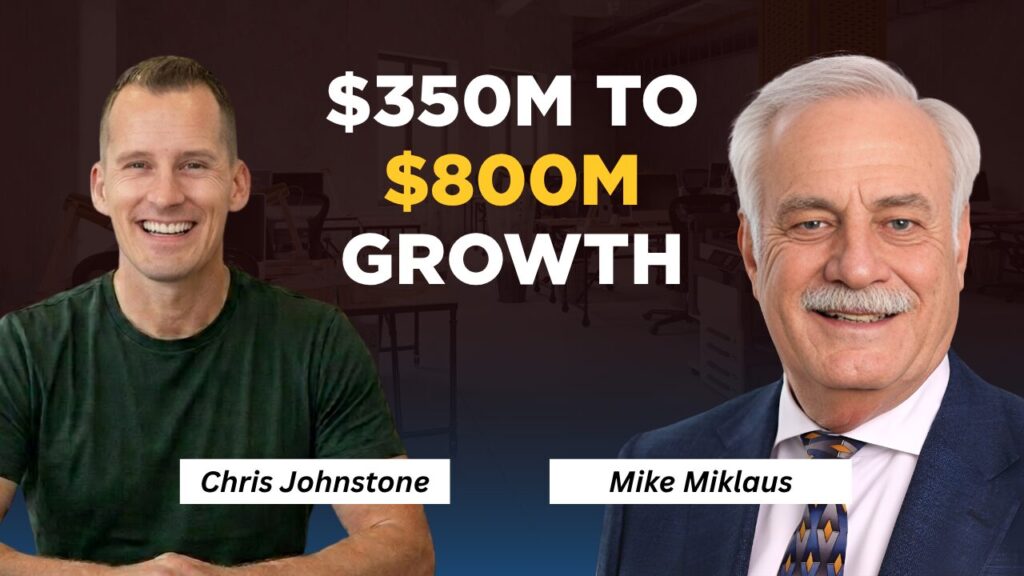
In this LoanOfficerPodcast.com episode, host Chris Johnstone speaks with Mike Miklaus about the principles that shaped his career, the importance of client relationships, mortgage referral strategies, database management, borrower education, and adapting to a changing mortgage industry.
His message is particularly relevant to mortgage loan officers, mortgage brokers, and real estate professionals who want to build a business that lasts beyond market cycles.
Who Is Mike Miklaus?
Mike Miklaus began his career after graduating from UCLA in 1972. He joined a savings and loan institution with a mission of promoting thrift and homeownership.
In 1974, he quoted his first FHA loan. By 1976, at the age of 25, he had moved to Sacramento and was working as a regional vice president of a savings bank, managing six offices.
His career continued into executive leadership. He became chief operating officer of a bank with $350 million in assets. During his seven-year period there, he helped grow the institution to $800 million in assets, with approximately $1 billion in servicing for others.
Eventually, Mike decided that professional success was not only about titles, financial results, or leadership positions. He discovered that he enjoyed mortgage lending more when he was closer to clients, understanding their needs and helping them make important financial decisions.
That realization influenced his decision to start Integrity Mortgage, which he founded and operated for 30 years.
His experience includes:
More than 50 years in the financial services and mortgage industry.
Two-time Mortgage Broker of the Year.
Founder of Integrity Mortgage for 30 years.
Helped thousands of people in Northern California obtain home loans.
Helped grow a bank from $350 million to $800 million in assets over seven years.
Approximately $1 billion in servicing for others during that banking period.
A 47-year involvement with Rotary, reflecting his commitment to community service.
Mike’s career demonstrates how industry knowledge, personal relationships, and a service-focused mindset can contribute to long-term professional success.
1. Build Your Mortgage Business Around Conversations, Not Just Transactions
One of Mike Miklaus’s most important lessons is that conversations create the foundation for mortgage business growth.
He describes the process in a simple sequence:
Conversations lead to connections. Connections lead to conversions. Conversions lead to contracts.
But before any of that can happen, mortgage professionals need to attract people who are willing to have a conversation.
This is an important distinction. Many loan officers focus heavily on closing transactions without giving enough attention to the conversations that create those opportunities.
A mortgage business cannot depend entirely on people finding a website, submitting an inquiry, or responding to an advertisement. Loan officers also need to build relationships and create opportunities to speak with potential borrowers and referral partners.
How to Create More Meaningful Mortgage Conversations
Start with curiosity. Ask people about their needs, plans, and circumstances before discussing mortgage products.
Listen carefully. Understand what the borrower is trying to accomplish rather than immediately recommending a loan.
Provide useful information. Help people understand their options and the decisions they need to make.
Maintain the connection. Follow up after the initial conversation instead of allowing the relationship to disappear.
Make the next step clear. When appropriate, schedule another conversation, review financing options, or connect the borrower with the right professional.
The goal is not to turn every conversation into an immediate loan application. It is to build enough trust that people feel comfortable returning when they need mortgage guidance.
2. Stop Competing Only on Mortgage Rates and Start Providing Advice
Mike makes an important distinction between mortgage pricing and mortgage advice.
As he explains during the interview, people can already use AI tools such as ChatGPT, Claude, and Gemini to find general information about getting a home loan.
However, access to information does not automatically give borrowers the ability to make the right decision.
Borrowers still need someone who can understand their individual circumstances, explain the available options, and help them evaluate which financing approach may be appropriate.
This is where a mortgage loan officer can provide value beyond simply quoting an interest rate.
Why Mortgage Advice Matters More Than a Rate Quote
A borrower may find several mortgage rates online, but those numbers do not necessarily explain:
Which loan program may fit their financial situation.
How much cash they need to close.
Whether seller concessions could improve affordability.
How different down payment options affect monthly payments.
Whether waiting or purchasing now makes sense for their circumstances.
What risks or trade-offs come with different financing options.
Mike believes mortgage professionals should position themselves as advisors who help clients make informed decisions.
How to Become a More Valuable Mortgage Advisor
Understand the full financial picture. Ask about income, savings, down payment, monthly expenses, and homeownership goals.
Explain multiple options. Help borrowers compare financing structures rather than presenting only one solution.
Discuss total costs. Explain payments, closing costs, seller concessions, and other relevant expenses.
Avoid unnecessary pressure. If a borrower is not ready, respect their decision and offer to continue the conversation when appropriate.
Build confidence through education. Make sure borrowers understand the choices they are making.
Mortgage loan officers who provide clear advice can differentiate themselves from competitors who focus almost entirely on pricing.
3. Educate Buyers About Opportunities in a Buyer’s Market
Another important topic in Mike’s interview is the need for mortgage professionals to educate buyers about changing market conditions.
He believes negative news about mortgage rates can discourage potential buyers from exploring homeownership.
When borrowers hear that rates are high, they may assume purchasing a home is automatically a bad decision.
Mike challenges loan officers to look beyond the headline interest rate and explain the full transaction.
In his view, buyers may have more negotiating opportunities in certain market conditions, including the possibility of seller concessions.
For example, a seller may be more willing to negotiate closing costs or other concessions when a property has been on the market longer or buyer competition is lower.
These concessions may help offset some of the initial costs of purchasing a home.
However, the value of any concession depends on the property, transaction, loan program, lender requirements, and the buyer’s financial situation.
How Loan Officers Can Educate Buyers More Effectively
Explain the complete transaction. Discuss more than the interest rate. Include purchase price, down payment, closing costs, and estimated monthly payments.
Discuss seller concessions. Explain how negotiated concessions may help reduce eligible buyer expenses, subject to applicable loan limits and requirements.
Compare realistic scenarios. Help buyers understand the financial differences between purchasing now and waiting.
Explain the trade-offs. Make sure borrowers understand that lower purchase prices, seller concessions, and interest rates affect different parts of the transaction.
Give buyers time to decide. The purpose of education is to help people make confident decisions, not pressure them into purchasing.
Mike’s message is that mortgage professionals have a responsibility to help clients understand the opportunities available to them rather than allowing negative headlines to make the decision for them.
4. Help Real Estate Agents Become Better Educators at Open Houses
Mike also believes mortgage professionals should help their Realtor partners improve how they approach open houses.
During the interview, he challenges the common practice of placing a couple of signs outside a property and waiting for visitors to arrive.
He suggests that agents can make a more intentional effort to attract nearby residents and potential buyers.
One example he gives is contacting approximately 100 homes around an open house.
The idea is to invite neighbors to visit the property and consider who might become their next neighbor.
This approach turns an open house into a broader neighborhood marketing opportunity.
How to Make an Open House More Effective
Contact nearby homeowners. Introduce the property to residents in the surrounding neighborhood.
Invite neighbors personally. Give them a reason to visit rather than relying exclusively on roadside signs.
Use simple invitations. A postcard or personal invitation can help create awareness.
Prepare useful financing information. Make sure interested visitors have access to someone who can answer mortgage questions.
Create a welcoming experience. Encourage conversations instead of immediately pushing visitors to buy.
How Mortgage Loan Officers Can Support Realtors
Mortgage professionals can provide value by helping agents understand:
How financing affects buyer affordability.
How seller concessions may work.
What buyers should prepare before making an offer.
How to communicate financing options accurately.
How to identify common mortgage questions during open houses.
This type of collaboration helps mortgage loan officers become more than a source of loan quotes. They become a useful resource for the Realtor’s business.
5. Use Curiosity to Understand What Borrowers Actually Need
Mike believes curiosity is one of the most important qualities a mortgage professional can develop.
He describes the value of asking questions instead of assuming what someone needs.
For example, when speaking with someone at an open house, a Realtor could ask whether the person is simply visiting because they live nearby or whether they are actively looking to purchase a home.
That small difference can change the entire conversation.
Rather than making assumptions, the professional gives the person an opportunity to explain their situation.
Questions Mortgage Professionals Can Ask
What has you thinking about buying a home?
Are you actively looking, or just exploring your options?
Have you spoken with a mortgage professional yet?
What monthly payment would feel comfortable?
What concerns do you have about the buying process?
What would you need to understand before making a decision?
These questions help loan officers discover what matters most to borrowers.
They also make conversations feel more natural and less like a sales pitch.
The lesson is simple: understand the person before recommending the product.
6. Build a Strong Mortgage Database and Document Client Information
One of Mike’s most valuable recommendations comes from reflecting on what he would do differently if he could restart his mortgage career.
He says he would take much better care of his database and become more disciplined about documenting information.
This is a significant lesson for mortgage loan officers who maintain hundreds or thousands of client and referral-partner contacts.
A contact database is not just a list of names, phone numbers, and email addresses. It should help professionals understand the people behind those records.
Mike gives an example of calling a past client after noticing a social media post about a new baby.
He congratulated the client, only to discover that the family had already welcomed another child before that one.
The experience reminded him that he had not been maintaining the relationship closely enough.
His point is that meaningful details matter.
What Mortgage Loan Officers Should Record in Their CRM
Family information. Relevant details about children, family milestones, and major life changes.
Important dates. Birthdays, anniversaries, home purchase anniversaries, and other occasions when appropriate.
Transaction history. Previous purchases, refinances, and relevant mortgage discussions.
Client preferences. Preferred communication channels and useful follow-up information.
Referral history. Which clients and partners regularly introduce new business.
Conversation notes. Important details from previous conversations that can make future communication more personal.
A well-maintained mortgage CRM helps loan officers communicate more thoughtfully and avoid treating every interaction as a new introduction.
7. Use AI and CRM Tools to Make Your Database More Useful
Mike believes mortgage professionals should embrace technology that helps them become more effective.
During the interview, he discusses how AI tools can work with database information to help identify which people a loan officer should contact.
Instead of randomly choosing names from a contact list, a loan officer could use organized information to prioritize relevant conversations.
For example, a CRM and AI-supported workflow could help identify:
Past clients who have not been contacted recently.
People with upcoming home purchase anniversaries.
Clients who may need a relevant follow-up.
Referral partners who regularly send business.
Contacts with important life events or milestones recorded in the database.
The value is not simply sending more automated messages. It is helping professionals remember important information and have more relevant conversations.
How to Apply AI to Mortgage Database Management
Keep your information organized. AI tools are only useful when the underlying data is accurate and structured.
Create contact categories. Separate past clients, prospective borrowers, Realtors, and other business partners.
Identify follow-up priorities. Use relevant CRM information to decide who needs attention.
Prepare personalized outreach. Use AI to help draft messages based on appropriate client information.
Review before sending. Make sure communications are accurate, relevant, respectful, and compliant with applicable privacy requirements.
Mike’s message is that technology should help mortgage professionals become more relational, not less.
8. Make Daily Outreach a Non-Negotiable Part of Your Mortgage Business
Mike emphasizes that consistent outreach is essential to maintaining relationships.
He specifically mentions daily phone calls as part of an effective mortgage business process.
He also discusses how social media can be useful when professionals engage intentionally.
For example, he suggests spending approximately 20 minutes in the morning and another 20 minutes in the afternoon acknowledging people, commenting on their activities, and participating in their lives.
The distinction is between using social media to build relationships and simply scrolling without a purpose.
Create a Daily Mortgage Outreach Routine
Make phone calls. Contact clients, referral partners, and other relevant people in your network.
Engage on social media. Respond to meaningful updates and participate in conversations.
Follow up on open opportunities. Do not allow interested borrowers or referral partners to disappear from your attention.
Update your database. Record relevant information from conversations.
Plan the next interaction. Make sure every important relationship has a clear next step when appropriate.
A consistent outreach routine helps mortgage professionals remain visible and maintain connections throughout changing market conditions.
9. Identify Your Raving Fans and Build a Referral System Around Them
Mike explains that some people in a mortgage professional’s database consistently refer new business.
He describes these individuals as raving fans.
They are not simply people who leave a positive Google review. They are people who genuinely recommend the loan officer to others.
Mike believes these relationships deserve special attention.
He suggests recognizing them through thoughtful gestures, invitations to events, and regular appreciation.
However, he also highlights something particularly important: loan officers should make it easy for satisfied clients and referral partners to introduce them to someone new.
Make Referrals Easier With a Three-Way Introduction
Mike explains that a vague referral is not always effective.
For example, a client might tell a loan officer that they sent a friend over, but the loan officer may never receive the person’s contact information or know whether the friend actually reached out.
Instead, Mike recommends a direct three-way introduction.
The referral partner sends a message introducing both people and explaining that one person needs mortgage assistance.
This creates a clear connection and makes the next step easier for everyone involved.
How to Build a Better Mortgage Referral Process
Identify your best referral partners. Review who consistently introduces new clients.
Show appreciation. Recognize people who support your business.
Explain how to refer you. Give clients a simple way to introduce you to someone.
Encourage direct introductions. Use three-way texts or emails when everyone agrees.
Follow through quickly. Contact the referred person and keep the referral partner informed when appropriate.
Protect the relationship. Provide the level of service that makes the referral partner comfortable recommending you again.
Mike makes an important observation: people may hesitate to refer someone if they are worried the experience could reflect badly on them.
That is why reliable service and communication are essential to long-term referral generation.
10. Keep Realtors Informed With the Touch and Touch Method
Mike describes a communication approach he calls “touch and touch.”
The idea is straightforward: whenever a mortgage professional communicates something important to a client, they should also consider whether the Realtor or other relevant transaction partner needs an update.
For example, imagine a loan officer discovers that an additional pay stub is required to complete a borrower’s documentation.
The loan officer contacts the borrower to request the missing document.
But the communication should not necessarily end there.
Mike recommends also contacting the Realtor to explain that the document has been requested and that the loan officer is monitoring the issue.
This helps keep everyone informed and reduces the chance that the Realtor will need to call repeatedly to ask about the transaction.
How to Apply Touch and Touch in Mortgage Transactions
When requesting documents: Tell the borrower what is needed and update the Realtor when appropriate.
When an issue appears: Explain what happened, what is being done, and whether the transaction timeline may be affected.
When an important milestone is reached: Keep relevant parties informed.
When a question remains unresolved: Communicate the next step instead of allowing uncertainty to grow.
When the transaction closes: Continue the relationship with the client and Realtor.
The goal is to reduce friction, improve communication, and demonstrate that the mortgage professional is proactively managing the transaction.
11. Set Expectations and Communicate Before People Have to Ask
Mike believes that a mortgage professional should not wait for a Realtor or borrower to request an update.
During the interview, he describes telling a Realtor that if they ever have to call him to find out when an appraisal is scheduled or to ask about another important transaction detail, he considers that a failure in his communication process.
This is a strong service standard.
Rather than making clients and agents chase information, the loan officer takes responsibility for keeping them informed.
Create a Proactive Mortgage Communication Process
At the beginning of the transaction: Explain how communication will work and what updates clients can expect.
During processing: Provide relevant progress updates and communicate documentation needs.
Before important deadlines: Confirm that required steps are being addressed.
When something changes: Explain the issue and the next action.
At closing: Confirm the final steps and celebrate the client’s milestone.
After closing: Continue communication rather than treating the transaction as the end of the relationship.
This approach can help create a better borrower experience and strengthen relationships with Realtors who value dependable communication.
12. Continue the Relationship After the Client Gets the Keys
For Mike, closing a mortgage should not be the final interaction with a client.
He describes a follow-up approach that continues after the borrower receives the keys.
For example, he suggests telling clients that he will call in approximately two weeks to see how they are settling into the home.
He also mentions following up before the first mortgage payment is due and checking in periodically afterward.
These conversations serve two purposes: they demonstrate ongoing care and create opportunities to maintain the relationship.
A Simple Post-Closing Mortgage Follow-Up Plan
| Timing | Suggested follow-up |
|---|---|
| After closing | Congratulate the client and celebrate the new home |
| Approximately two weeks later | Ask how the client is settling in |
| Before the first payment | Remind the client about the upcoming payment |
| Periodically afterward | Check in and maintain the relationship |
| Around important milestones | Send a thoughtful, relevant message |
The exact timing should reflect the client’s preferences and the loan officer’s communication process.
Ask for Referrals Naturally
Mike also suggests asking whether the client knows someone who may be looking to purchase or refinance within the next 30–60 days.
Rather than making a vague request, he encourages a direct conversation and, when appropriate, a joint introduction.
The key is to make the referral process comfortable and easy.
13. Help Families Explore Down Payment Assistance From Parents
One of the most meaningful examples in Mike’s interview involves a young woman considering purchasing a home.
Mike completed a total cost analysis and explained her possible choices. She initially decided that waiting was the right option for her.
Rather than pressuring her, Mike respected her decision and asked whether she would be open to another conversation that included her parents.
He knew the family because he had previously helped her brother purchase a home.
During the conversation, her father considered helping his daughter with a down payment so she could achieve a more affordable monthly payment.
Mike used the example to highlight an opportunity for families with significant home equity to consider helping the next generation when appropriate.
How Mortgage Professionals Can Discuss Family Financial Support
Understand the borrower’s concern. Identify whether monthly affordability, down payment requirements, or other costs are creating hesitation.
Explore the family conversation. When the borrower is comfortable, consider whether family members should participate in the discussion.
Explain available options. Discuss eligible gift funds or other permitted arrangements under the relevant loan program.
Clarify requirements. Explain documentation, eligibility, and any applicable lender or program rules.
Respect everyone’s decision. Family support should be voluntary and based on an informed understanding of the financial implications.
Mike’s example demonstrates the importance of looking beyond the immediate loan application and understanding the broader financial circumstances that may influence a borrower’s decision.
14. Recognize the Opportunity in Generational Home Equity
Mike also discusses the amount of home equity held by older generations in the United States.
He believes mortgage professionals should be open to conversations about how families might use that equity to help younger generations purchase homes.
This does not necessarily mean selling a property. Depending on the family’s situation, there may be other possibilities worth discussing with qualified financial and mortgage professionals.
For example, families might explore:
Eligible down payment gifts.
Multi-generational homeownership.
Other appropriate family-supported purchase arrangements.
Financial planning conversations around transferring wealth.
Every situation requires careful consideration of tax, legal, lending, and financial implications. Mortgage professionals should explain their area of expertise and refer clients to qualified advisors when needed.
The broader lesson is to ask thoughtful questions and help families understand the options available to them.
15. Use One-to-Many Education to Strengthen Realtor Relationships
Mike enjoys presenting and simplifying complex ideas.
During the interview, he explains that he regularly participates in Realtor meetings and provides educational content to agents.
In one example, he attends meetings involving approximately 50–70 eXp agents every other week. The meeting organizer invites him to close sessions with a discussion about mindset or relevant real estate topics.
This gives Mike an opportunity to share information with many professionals at once.
It also allows him to build credibility without making every interaction a direct sales pitch.
How Mortgage Loan Officers Can Use Educational Presentations
Choose a relevant topic. Discuss buyer affordability, seller concessions, mortgage preparation, or open-house strategies.
Simplify complex information. Make the topic easy for agents to understand and explain to their clients.
Use real examples. Show how a financing concept can affect an actual transaction.
Encourage questions. Make the presentation interactive.
Provide practical takeaways. Give agents information they can use immediately.
Stay involved. Continue participating in meetings and supporting the Realtor community.
This approach helps mortgage professionals build relationships through education and service.
16. Adapt to Technology Without Losing Your Personal Touch
Mike’s career has spanned enormous changes in the mortgage industry.
After 30 years of running Integrity Mortgage, he decided to join Success Mortgage Partners.
He described this move as swimming upstream because many professionals were moving from banking toward brokerage while he was returning to a banking environment.
His decision was influenced partly by the technology, tools, and resources available through the organization.
Mike explained that some of these systems would be difficult for him to create independently.
He specifically mentioned AI systems, mortgage coaching resources, and other tools that could help him remain competitive and continue serving clients.
His broader point is that mortgage professionals should not become so attached to the way they have always worked that they ignore useful changes.
How to Adapt Your Mortgage Business
Stay curious. Keep learning about technology and changes in borrower behavior.
Evaluate tools based on usefulness. Choose systems that solve real business problems.
Improve your workflow. Use technology to organize information, improve follow-up, and support communication.
Protect the client relationship. Do not allow automation to remove the personal attention borrowers need.
Keep learning. Be willing to update your processes as the industry changes.
Mike’s philosophy is that professionals must adapt to remain relevant. But adaptation should strengthen the human side of mortgage lending, not eliminate it.
17. Understand Who Your Real Competitors Are
Mike also challenges the traditional argument between mortgage bankers and mortgage brokers.
He believes the debate can distract professionals from a more significant competitive challenge: large, vertically integrated organizations that combine lending, real estate, title, servicing, and other services.
He points to companies that are building broader platforms around the homebuying process.
His argument is that independent mortgage professionals and community-focused lenders need access to strong tools, technology, and resources if they want to remain competitive.
What Mortgage Professionals Can Learn
Focus on the borrower. The most important question is who is providing the client with reliable mortgage advice.
Use available resources. Technology and operational support can help smaller teams compete more effectively.
Build local relationships. Personal service and community knowledge remain valuable.
Stay informed. Understand how larger organizations are changing the customer experience.
Differentiate through advice. Provide guidance that helps borrowers make informed decisions rather than competing only on price.
Mike’s perspective encourages mortgage professionals to focus on the value they deliver instead of spending too much time debating industry labels.
18. Build Your Career Around Service, Discipline, and Alignment
A major theme throughout Mike’s interview is that long-term professional success requires more than motivation.
He believes freedom in the mortgage business comes with discipline.
Loan officers may enjoy the flexibility of managing their schedules, but maintaining a sustainable income requires consistent processes and intentional effort.
He also emphasizes the importance of an attitude of gratitude, curiosity, and a genuine desire to serve others.
Mike connects these principles to his book, The Alignment Advantage.
In the book, he explores how mindset influences behavior and how an attitude of curiosity and service can create a lasting impact.
Three Principles for Long-Term Mortgage Career Growth
Discipline: Put repeatable processes in place and follow them consistently.
Curiosity: Continue learning about people, their needs, and the industry.
Service: Focus on helping clients and communities rather than pursuing transactions alone.
Mike’s career demonstrates how these principles can influence professional decisions over many decades.
19. The Alignment Advantage: Mike Miklaus’s Approach to Leadership and Service
Mike’s book, The Alignment Advantage, reflects many of the ideas he discusses during the podcast.
He explains that the book explores how mindset can influence others and how curiosity and a genuine desire to serve can lead to a meaningful professional legacy.
He also shared that he co-authored Success Redefined in 2024 with Jack Canfield and Nick Nathan, among others. That book became an Amazon bestseller, with proceeds going toward efforts to fight human trafficking.
At the time of the interview, Mike said The Alignment Advantage had recently been released and had become a bestseller in Amazon’s Christian business section.
The book reflects his belief that mortgage professionals can build more fulfilling careers by aligning their mindset, actions, and service to others.
For loan officers, this means thinking beyond the number of loans closed and considering the impact they have on clients, families, referral partners, and communities.
A Practical Mortgage Business Growth Checklist
Mortgage professionals who want to apply Mike Miklaus’s ideas can begin with this checklist.
Make meaningful client and referral-partner conversations a daily priority.
Focus on advice and education instead of competing only on rates.
Help buyers understand seller concessions and affordability.
Support Realtors with useful open-house and buyer education strategies.
Ask questions before recommending mortgage products.
Document important client details in your CRM.
Use technology to prioritize relevant follow-up.
Identify your most valuable referral partners.
Make three-way introductions easy for satisfied clients.
Keep Realtors informed throughout every transaction.
Follow up after closing and before the first mortgage payment.
Explore appropriate family-supported homeownership options.
Participate in Realtor meetings and educational events.
Adopt technology that improves service and efficiency.
Build your business around discipline, curiosity, and service.
The goal is not to implement everything in one day. Start with the processes that need the most attention and build consistency over time.
Frequently Asked Questions About Mike Miklaus and Mortgage Business Growth
How long has Mike Miklaus worked in the mortgage industry?
Mike Miklaus began his financial services career in 1972 and quoted his first FHA loan in 1974. During the interview, he described having 52 years of experience serving people and providing home loans.
What company did Mike Miklaus found?
Mike founded Integrity Mortgage and spent 30 years running the company, helping thousands of people in Northern California obtain home loans.
How did Mike Miklaus help grow a bank?
Mike served as chief operating officer of a bank that had $350 million in assets. Over seven years, he helped grow it to $800 million in assets, with approximately $1 billion in servicing for others.
How many times was Mike Miklaus named Mortgage Broker of the Year?
Mike Miklaus said he received the Mortgage Broker of the Year recognition twice.
What is the touch and touch method in mortgage lending?
The touch and touch method is Mike’s approach to keeping both borrowers and relevant transaction partners informed. When a loan officer communicates an important request or update to a borrower, they also consider whether the Realtor needs the same information.
Why does Mike Miklaus emphasize mortgage client relationships?
Mike believes conversations create connections, connections lead to conversions, and conversions lead to contracts. He emphasizes that genuine relationships and consistent service help create referrals and long-term business.
How can mortgage loan officers improve their referral business?
Loan officers can identify their most active referral partners, maintain regular communication, provide useful information, appreciate people who refer business, and make introductions easy through three-way texts or emails.
How can AI help mortgage loan officers manage their databases?
AI and CRM tools can help organize contact information, identify follow-up priorities, and prepare more relevant outreach. Mike emphasizes using technology to make relationships stronger and communication more effective.
What is The Alignment Advantage by Mike Miklaus about?
The Alignment Advantage explores the role of mindset, influence, curiosity, and service in building a meaningful professional life and legacy.
Final Takeaways: Build a Mortgage Business That Lasts
Mike Miklaus’s career offers an important reminder: mortgage business growth is not only about interest rates, marketing campaigns, or the number of loans closed.
It is about the relationships built along the way.
From helping grow a bank from $350 million to $800 million in assets to founding Integrity Mortgage and serving thousands of people in Northern California, Mike’s experience reflects the importance of staying connected to clients and continuously adapting to the industry.
His most practical lessons are clear:
Create conversations that lead to meaningful connections.
Provide mortgage advice instead of competing only on price.
Educate buyers about their options and the full cost of homeownership.
Build stronger Realtor referral relationships.
Maintain a detailed and useful client database.
Use AI and technology to improve follow-up.
Keep clients and Realtors informed throughout transactions.
Continue serving clients after closing.
Build your career around discipline, curiosity, and service.
For mortgage loan officers and real estate professionals, these principles can help create a business built on trust, consistent communication, and long-term relationships.
Listen to the full LoanOfficerPodcast.com episode featuring Mike Miklaus and host Chris Johnstone to hear the complete conversation and learn more about his approach to mortgage lending, client relationships, and professional growth.
Apply the lessons that make sense for your mortgage business, and leave a 5-star review if you found the episode valuable.
📣 Share This With Another Loan Officer!
