How Kelly Rogers Is Building a $90M Mortgage Business Through Relationships, Data & AI
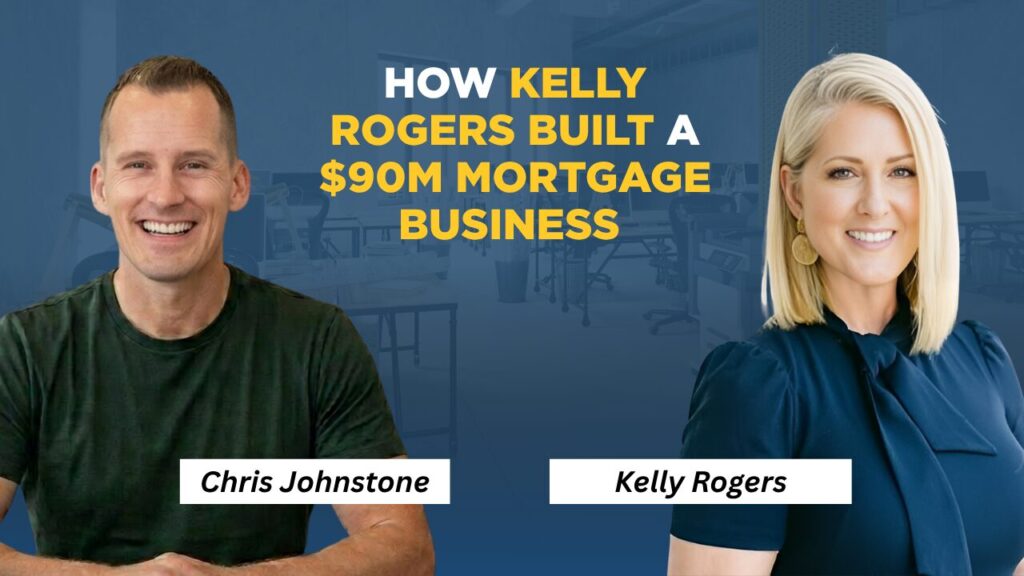
How to Build a High-Performing Mortgage Business With Data, Relationships & AI: Lessons From Kelly Rogers
Building a successful mortgage business requires more than simply generating more leads.
The highest-performing loan officers understand where their business comes from, how effectively they convert opportunities, which relationships deserve their time, and how to adapt as consumer behavior changes.
That combination of relationships, data, systems, personal service, and technology has been central to the success of mortgage professional Kelly Rogers.
In an episode of LoanOfficerPodcast.com, Kelly Rogers joined host Chris Johnstone to share how she built and scaled her mortgage business over a career spanning more than three decades.
Her approach offers a valuable blueprint for loan officers who want to grow production without relying solely on purchased leads.
After returning to production at the end of 2024 following a period in leadership, Kelly had personally helped 85 families and generated approximately $43 million in mortgage volume at the time of the conversation. Her goal was to finish the year near 200 families and $90 million in production.
She also leads a collaborative group of top-producing loan officers projected to produce approximately $400 million collectively.
But Kelly’s growth didn’t come from one marketing hack.
It came from understanding a fundamental principle:
You cannot effectively grow what you do not measure—and you cannot build a sustainable mortgage business without relationships.
This guide breaks down Kelly Rogers’ strategies for mortgage business growth and explains how loan officers can use data, referral relationships, database marketing, personal touches, and AI visibility to build a stronger business.
Who Is Kelly Rogers?
Kelly Rogers is a Houston-based mortgage professional with a career that began in 1995.
Her path into the mortgage industry wasn’t necessarily planned.
She initially intended to pursue real estate, but someone encouraged her to enter the mortgage business instead—a decision she describes as one of the greatest favors of her life.
Throughout her career, Kelly has experienced multiple mortgage cycles and major industry changes.
She stepped away from the industry for eight years to raise her children and returned to mortgage lending in 2010.
That experience shaped an important theme in her career:
The ability to start fresh and adapt.
Today, Kelly combines personal mortgage production with leadership and collaboration. She works alongside a group of high-performing loan officers while continuing to grow her own production.
Her business is built around several core principles:
-
Relationship-based mortgage marketing
-
Data-driven decision-making
-
Monthly goal tracking
-
Conversion optimization
-
Realtor relationships
-
Database engagement
-
Personalized communication
-
Technology adoption
-
AI search visibility
For loan officers looking for a sustainable model of growth, these principles provide a practical framework.
Lesson 1: Relationships Are the Foundation of a Sustainable Mortgage Business
When Kelly first entered mortgage lending, she didn’t have a sophisticated marketing strategy.
Her immediate focus was survival.
But she quickly learned that relationships needed to become the center of her business.
That principle has remained consistent throughout her career.
Mortgage lending is fundamentally a relationship-driven industry.
A loan officer may close one transaction with a borrower, but a strong experience can lead to:
-
Repeat business
-
Family referrals
-
Friend referrals
-
Realtor relationships
-
Professional introductions
-
Long-term database value
The strongest businesses are not necessarily built by constantly replacing lost leads.
They are built by developing relationships that continue producing opportunities.
Why Relationship Marketing Works for Loan Officers
Relationship marketing creates compounding value.
A single relationship can potentially create multiple future opportunities.
For example:
Great Service → Trust → Repeat Client → Referral → New Relationship → More Referrals
That is significantly different from a transactional lead-generation model where every new opportunity must be purchased.
Kelly’s approach demonstrates that relationships should not simply be considered a source of leads.
They are an asset.
And like every valuable asset, they require ongoing investment.
Lesson 2: Monthly Goals Are More Actionable Than Annual Goals
One of the biggest turning points in Kelly’s business came after reading The 12 Week Year in 2017.
At the time, she had experienced stagnation.
In 2016, she helped approximately 140 families.
She expected 2017 to be a growth year.
Instead, she helped approximately 139 families.
That forced her to rethink her approach.
Kelly decided to move away from overwhelming annual goals and instead break her business into smaller periods.
She began focusing on:
-
Monthly goals
-
Monthly projections
-
Monthly performance reviews
-
Data tracking
-
Conversion metrics
The results followed.
According to Kelly, her production grew from approximately:
-
140 families
-
To 212 families
-
Then 359 families
-
Then nearly 600 families during the COVID-era boom
The lesson isn’t that every loan officer will follow the same production trajectory.
The lesson is that smaller measurement periods create faster feedback loops.
Why Annual Mortgage Goals Can Be Dangerous
Annual goals are useful for vision.
But they can be ineffective for daily decision-making.
Imagine setting a goal in January to close 100 loans.
If you don’t check your progress until June, you may discover too late that your pipeline isn’t strong enough.
Kelly’s approach solves that problem.
Instead of waiting for the end of the year, ask every month:
-
How many leads did I receive?
-
How many became applications?
-
How many moved into contract?
-
How many closed?
-
Where is my biggest conversion problem?
-
What needs to change next month?
This allows loan officers to make adjustments before small problems become major problems.
Lesson 3: Track Your Mortgage Funnel From Lead to Closing
One of the most actionable parts of the conversation was Kelly’s focus on conversion metrics.
She doesn’t simply look at total closed loans.
She tracks the entire funnel.
Her process includes monitoring:
-
Leads
-
Credit pulls
-
Applications
-
Conversion rates
-
Loans under contract
-
Closed loans
This creates visibility into where opportunities are being lost.
For example, imagine a loan officer receives plenty of leads but has a low application rate.
The problem may be:
-
Slow response times
-
Weak follow-up
-
Poor lead qualification
-
Lack of trust
-
Ineffective communication
Alternatively, if many borrowers apply but few enter contract, the issue may be elsewhere.
Without tracking the funnel, the loan officer may incorrectly assume:
“I just need more leads.”
But sometimes the answer isn’t more leads.
Sometimes the answer is improving conversion.
Kelly Rogers’ Mortgage Conversion Framework
Kelly shared the approximate benchmarks she aims for in her relationship-driven business:
Lead to Application: Approximately 80%
Her goal is to convert approximately 80% of warm referral leads into applications.
Application to Contract: Approximately 50%–60%
From those applications, she aims to convert approximately 50% to 60% into a purchase or refinance transaction.
Contract to Closing: Approximately 95%
Once a borrower is under contract, the goal is to successfully guide approximately 95% through to closing.
These numbers are particularly relevant to her business model because her leads are primarily warm referrals rather than cold purchased leads.
The larger lesson is not that every loan officer should copy these exact percentages.
The lesson is:
Know your own numbers.
The Mortgage Funnel Formula
Every loan officer should be able to work backward from their production goal.
Start with:
How many families do I want to help?
Then calculate:
How many closings are required?
Then:
How many contracts are required?
Then:
How many applications are required?
Finally:
How many leads are required?
This creates a measurable mortgage business plan.
Instead of saying:
“I want to grow.”
You can say:
“I need X leads this month to create Y applications and Z closings.”
That changes growth from a vague ambition into an operational strategy.
Lesson 4: When Leads Are Down, Spend More Time With Referral Partners
Every loan officer eventually experiences a slow month.
When that happens, many people immediately look for a new marketing channel.
Kelly takes a simpler approach.
She goes back to relationships.
During the episode, she described using an available break in her schedule to visit a real estate office where she already had relationships.
She:
-
Delivered a birthday gift
-
Connected with a team leader
-
Met newer agents
-
Learned about upcoming open houses
-
Created opportunities for future interactions
This illustrates an important principle:
Business development doesn’t always need to feel like prospecting.
Sometimes it means showing up.
The 50% Rule: Spend Half Your Time With People Who Send You Business
One of Kelly’s most valuable strategies is her personal goal of spending approximately:
50% of her time with people who send her business.
That can include:
-
Realtors
-
Past clients
-
Referral partners
-
Professional partners
-
People in her database
This is a powerful way to prioritize time.
Many loan officers spend their best hours:
-
Organizing their inbox
-
Handling unnecessary administrative tasks
-
Reacting to problems
-
Consuming social media
-
Working inside their CRM
But high-value relationships require time.
A simple question to ask is:
How much of my week is spent with people capable of generating future opportunities?
If the answer is very little, there may be a business development problem.
Lesson 5: Database Marketing Still Works—Especially When It Feels Personal
In a world of AI, automation, and social media, it can be tempting to assume traditional relationship marketing no longer matters.
Kelly disagrees.
She continues to use personal touches, including:
-
Cards throughout the year
-
Direct communication
-
Client events
-
Personal invitations
She also hosts VIP events for clients she has previously helped.
The goal is to remind past clients:
We’re still here, and we’re still available to help.
Why Past Clients Are an Underrated Mortgage Lead Source
A past client already knows something important:
What it’s like to work with you.
That means the relationship has an existing foundation of experience.
However, many loan officers disappear after closing.
Then, years later, the borrower receives marketing from another lender.
The solution is consistent connection.
You don’t need to constantly sell.
Instead:
-
Celebrate milestones
-
Send useful information
-
Invite clients to events
-
Stay visible
-
Check in personally
The objective is simple:
Stay remembered.
Lesson 6: Give More Value Before Asking for Referrals
One of Kelly’s most interesting perspectives is her approach to asking for referrals.
Unlike many mortgage sales strategies, she doesn’t aggressively ask every client for referrals.
Her philosophy is closer to:
Give, give, give, give, then ask.
She focuses on providing value throughout the relationship.
Eventually, there may be an opportunity to ask indirectly.
For example, when inviting a client to an event, she might encourage them to bring a friend because she would love to meet them.
This approach is based on a powerful marketing principle:
People are more likely to refer someone they trust without feeling pressured.
How to Generate Mortgage Referrals Without Being Pushy
Loan officers often struggle with referral requests because they feel transactional.
A value-first approach can make the process more natural.
Focus first on:
Exceptional Communication
Keep clients informed.
Problem Solving
Be proactive when challenges arise.
Education
Help clients understand the process.
Personal Connection
Remember important details about their lives.
Post-Closing Value
Continue serving after the transaction.
When you consistently create a great experience, referrals become easier.
Lesson 7: Every Mortgage Transaction Can Create a New Realtor Relationship
One of the smartest strategies Kelly shared involves connecting with the real estate agent on the other side of a transaction.
Many loan officers focus only on their existing referral partners.
Kelly sees every transaction as a potential relationship-building opportunity.
When a new contract comes in, she personally contacts the listing agent.
Even though she has a template, she personalizes the communication.
She intentionally avoids making the first interaction feel automated.
Why?
Because this may be the first time that Realtor has encountered her business.
How to Turn Transactions Into Realtor Relationships
A practical strategy inspired by Kelly’s process looks like this:
Step 1: Personally Introduce Yourself
Don’t rely exclusively on automated CRM messages.
Make the first interaction personal.
Step 2: Communicate Throughout the Process
Keep the agent informed.
Step 3: Build Confidence Before Closing
Provide clarity around important milestones.
Step 4: Reach Out Personally During Closing Week
Confirm expectations and demonstrate professionalism.
Step 5: Ask to Meet
Once trust has been established, invite the agent for coffee or another conversation.
The key insight is this:
Don’t wait until after a transaction to begin building a relationship.
Build the relationship during the transaction.
Lesson 8: Personal Communication Can Be a Competitive Advantage
Mortgage automation is useful.
But excessive automation can remove personality.
Kelly intentionally sends certain messages herself.
Even with high volume, she wants people to know the communication is coming directly from her.
That creates a sense of:
-
Accountability
-
Accessibility
-
Professionalism
-
Personal connection
Technology should improve the client experience.
It shouldn’t make the experience feel robotic.
The best mortgage businesses will likely combine:
Automation for efficiency + Personalization for trust
Lesson 9: Google Reviews and Online Reputation Support Relationship-Based Growth
During the conversation, Chris noted Kelly’s strong Google Business Profile and more than 100 five-star ratings.
Online reputation has become increasingly important for mortgage professionals.
A referral might introduce a borrower to you.
But before contacting you, that borrower may search your name.
They may check:
-
Google reviews
-
Your website
-
Social media
-
Videos
-
Online articles
Your digital reputation can either reinforce trust or create doubt.
How Loan Officers Can Improve Their Online Authority
Focus on building a credible digital footprint.
This can include:
-
A complete website
-
Google Business Profile optimization
-
Authentic client reviews
-
Educational blog posts
-
YouTube videos
-
Social media content
-
Podcast appearances
The goal is consistency.
When a potential client searches for your name, the information they find should reinforce your expertise.
Lesson 10: AI Is Becoming a New Referral Source for Loan Officers
One of the most important parts of the conversation involved AI-generated mortgage leads.
Kelly shared that she has already received leads from AI recommendations—and successfully closed some of them.
She described one particularly interesting situation involving a relocating borrower.
The borrower was frustrated with her existing lending experience and wanted direct answers.
After using AI to search for help, she was recommended to connect with Kelly.
Kelly responded personally and quickly.
She scheduled a conversation over the weekend and successfully helped the borrower close within a short timeline.
This example demonstrates something important:
AI may increasingly function as a digital referral partner.
From Search Engine to AI Referral Engine
Traditional online lead generation often looked like:
Search → Click → Fill Out Form → Get Contacted
AI-powered discovery may look more like:
Question → AI Recommendation → Direct Introduction → Conversation
This changes the quality of the interaction.
The consumer may not be looking for dozens of random lenders.
They may be asking:
-
Who should I talk to?
-
Who specializes in this situation?
-
Who has a strong reputation?
-
Who is local?
-
Who can help me understand my options?
The mortgage professionals recommended in those moments may have a significant advantage.
How to Get Found in AI Search as a Loan Officer
Kelly’s advice is straightforward:
If you want AI to find you, you need to be in the places where it can find information about you.
That means building a strong online presence.
Potential areas include:
Your Website
Create pages that clearly explain your expertise and services.
Educational Articles
Publish useful answers to common borrower questions.
Google Business Profile
Maintain accurate information and build authentic reviews.
YouTube
Create videos around common mortgage questions.
Industry Publications
Contribute useful expertise when opportunities arise.
Social Media
Build a consistent and authentic professional presence.
Lesson 11: Become Hyper-Intentional About Your Content
Kelly discussed becoming more intentional about publishing articles and creating content that helps her become discoverable.
This is increasingly important for modern mortgage SEO.
The goal isn’t simply to publish random blog posts.
The goal is to demonstrate expertise around topics borrowers actually care about.
For example, instead of publishing:
“Welcome to My Mortgage Website”
create useful resources such as:
-
How much home can I afford?
-
How does a mortgage pre-approval work?
-
What credit score do I need?
-
How do self-employed borrowers qualify?
-
What should first-time homebuyers know?
-
How does refinancing work?
-
What happens after mortgage pre-approval?
Each useful piece of content strengthens your digital footprint.
SEO and AI Search Optimization for Loan Officers
Traditional mortgage SEO focuses on ranking in search engines.
AI search optimization expands that concept.
The objective is to create enough clear, useful, authoritative information that search engines and AI systems can understand:
-
Who you are
-
Where you operate
-
What you specialize in
-
Who you help
-
What problems you solve
This is especially important as consumers increasingly use conversational search queries.
Instead of searching:
“Mortgage lender Houston”
a consumer might ask:
“Who is a good mortgage lender in Houston for a relocating homebuyer?”
Your content should help establish relevance for those types of questions.
Lesson 12: Meet Mortgage Consumers Where They Are
Kelly has survived and adapted through decades of mortgage industry change.
Her philosophy is simple:
Meet clients where they are.
That has always been important.
But where consumers are changes.
At different points, consumers may have been reached through:
-
Phone calls
-
Direct mail
-
Open houses
-
Email
-
Google
-
Social media
Now, AI platforms are becoming part of that journey.
The strategy shouldn’t be to abandon everything that worked before.
Instead, add new capabilities.
The modern mortgage business can combine:
Relationships + Referrals + Database + Personal Branding + Search + AI
Lesson 13: Technology Should Improve Speed and Trust
Kelly emphasized the importance of working with organizations that thoughtfully embrace technology and AI.
For her, technology isn’t simply about replacing people.
It’s about improving the customer experience.
The faster a loan officer can:
-
Respond
-
Educate
-
Engage
-
Process information
-
Move toward approval
the greater the opportunity to build trust.
Speed alone isn’t enough.
But speed combined with excellent communication is powerful.
A fast response tells a potential borrower:
You matter.
Why Fast Response Times Matter in Mortgage Lead Conversion
A lead is most valuable when the consumer is actively seeking help.
Waiting too long can create opportunities for competitors.
Kelly’s AI-generated lead story demonstrates this perfectly.
The borrower contacted her during the weekend.
Kelly responded personally and quickly.
That responsiveness helped create a relationship.
The lesson:
Technology may generate the introduction, but human responsiveness converts the opportunity.
Lesson 14: The Mortgage Industry Will Continue to Change—Adaptability Wins
Kelly has experienced numerous predictions about the future of mortgage lending.
Over the years, industry professionals have predicted:
-
Technology would eliminate loan officers
-
Large companies would dominate
-
Market changes would destroy traditional businesses
Yet mortgage professionals continue to adapt.
Kelly’s perspective is not to fear every new technology.
Instead, ask:
How do we adjust?
AI is another evolution.
The loan officers who remain curious, adaptable, and willing to learn may be better positioned than those who ignore changing consumer behavior.
A Practical Mortgage Business Growth Plan Inspired by Kelly Rogers
Here is a practical framework based on the strategies discussed in the episode.
Step 1: Set Monthly Production Goals
Break annual targets into monthly numbers.
Ask:
-
How many families do I want to help?
-
How much production do I want?
-
How many closings are required?
Step 2: Work Backward Through Your Funnel
Calculate:
Closings → Contracts → Applications → Leads
Understand exactly how many opportunities you need.
Step 3: Track Conversion Metrics Every Month
Measure:
-
Lead-to-application rate
-
Application-to-contract rate
-
Contract-to-close rate
Identify weaknesses immediately.
Step 4: Protect Time for Referral Relationships
Aim to spend a meaningful percentage of your week with:
-
Realtors
-
Past clients
-
Referral partners
-
Centers of influence
Step 5: Strengthen Your Database
Stay connected through:
-
Personal messages
-
Cards
-
Events
-
Educational content
-
Periodic check-ins
Step 6: Give Value Before Asking
Don’t make every interaction a sales pitch.
Build goodwill.
Serve first.
Step 7: Treat Every Transaction as a Networking Opportunity
Connect with new Realtors involved in your transactions.
Make the introduction personal.
Step 8: Build Your Digital Reputation
Focus on:
-
Google reviews
-
Website authority
-
Educational content
-
Social proof
-
Professional visibility
Step 9: Create Content for AI and Search Discovery
Publish useful answers around your expertise and ideal clients.
Step 10: Respond Quickly to New Opportunities
Whether the lead comes from a Realtor, Google, your database, or AI, responsiveness matters.
The Modern Mortgage Business Formula
Kelly Rogers’ approach can be summarized in one simple formula:
Relationships + Data + Systems + Personalization + Technology = Sustainable Mortgage Growth
Each component plays a different role.
Relationships
Generate trust and referrals.
Data
Shows where improvement is needed.
Systems
Create consistency.
Personalization
Makes people remember you.
Technology
Helps you adapt to changing consumer behavior.
The strongest mortgage businesses don’t rely entirely on one element.
They combine all five.
Key Takeaways for Loan Officers
Here are the biggest lessons from Kelly Rogers’ approach:
1. Relationships Should Be at the Center of Your Business
Long-term connections can generate sustainable opportunities.
2. Track Your Entire Funnel
Don’t just measure closings.
Measure what happens before closing.
3. Use Monthly Goals
Shorter planning cycles help you identify problems sooner.
4. Know Your Conversion Rates
Your numbers tell you where to focus.
5. Spend More Time With Referral Sources
Protect time for people who can generate future opportunities.
6. Continue Investing in Your Database
Past clients remain valuable relationships.
7. Give Before You Ask
Value-first marketing can generate more natural referrals.
8. Turn Transactions Into Relationships
Every new transaction may introduce you to a new Realtor.
9. Build a Strong Digital Reputation
Reviews and online authority reinforce trust.
10. Prepare for AI-Powered Discovery
AI is increasingly becoming part of the consumer search journey.
11. Create Helpful Content
Useful content can improve visibility in both search engines and AI platforms.
12. Stay Adaptable
The mortgage industry changes, but adaptable professionals continue finding opportunities.
Final Thoughts: How Loan Officers Can Build a Business That Survives Industry Change
Kelly Rogers’ career offers an important lesson for mortgage professionals.
The tools change.
The market changes.
Technology changes.
Consumer behavior changes.
But the core principles of a sustainable business remain remarkably consistent.
Know your numbers.
Invest in relationships.
Provide value.
Stay connected.
Adapt to where consumers are going.
Kelly’s strategy isn’t based on chasing every new lead-generation trend.
Instead, she combines traditional relationship building with modern technology.
She tracks her numbers.
She invests time in Realtors and referral partners.
She stays connected to past clients.
She personally communicates with new professionals.
And now, she is intentionally building her online authority to prepare for AI-driven consumer discovery.
That combination may be one of the strongest models for the future of mortgage lending.
The future isn’t necessarily:
Relationships versus AI.
It is more likely:
Relationships powered by better data and technology.
For loan officers who want to grow, the path is clear.
Measure your business.
Understand your conversion rates.
Spend time with people.
Give value.
Build a reputation.
Create useful content.
And be willing to meet consumers wherever they choose to search next.
Frequently Asked Questions
How can a loan officer grow a mortgage business?
Loan officers can grow their mortgage business by tracking conversion metrics, building Realtor and referral relationships, staying connected with past clients, improving their database marketing, creating valuable content, and adapting to new technology and consumer search behavior.
What mortgage metrics should loan officers track?
Important mortgage business metrics include total leads, applications, credit pulls, application conversion rates, contracts, closed loans, and conversion rates between each stage of the mortgage funnel.
How do loan officers get more Realtor referrals?
Loan officers can generate more Realtor referrals by spending consistent time building relationships, providing excellent communication during transactions, personally connecting with agents, attending open houses, and delivering value before asking for business.
Should loan officers ask clients directly for referrals?
There are multiple approaches. Kelly Rogers uses a value-first strategy focused on providing an exceptional experience and maintaining long-term relationships rather than aggressively asking for referrals throughout every transaction.
Can AI generate mortgage leads?
The podcast discussion shows that AI platforms can increasingly influence how consumers discover and select mortgage professionals. Building a strong online presence, useful content, reviews, and recognizable expertise may improve the likelihood of being discovered.
How can loan officers rank in AI search?
Loan officers can improve AI search visibility by publishing useful educational content, maintaining an authoritative website, optimizing their Google Business Profile, earning authentic reviews, and clearly demonstrating their areas of expertise across relevant online platforms.
Why is database marketing important for mortgage professionals?
A strong database helps loan officers maintain relationships with past clients and referral sources. Consistent communication, personal touches, events, and valuable information can keep the loan officer top of mind for future mortgage needs and referrals.
📣 Share This With Another Loan Officer!
